James


Evangelist Rambabu and False Prophets: How to Detect False Prophecy and Test Words of Knowledge - Response 2
Is Evangelist Rambabu A Fraud? What He Doesn't Want You To Know.
How to Detect a False Prophet: Biblical Signs of False Prophets and False Teachers
You may have watched some of the videos I have been making about Evangelist Rambabu. I do not view him as a minister, but for argument's sake I will address him as such.
Well, he has blocked me now — and, you know, my life will never be the same again! I am so sad. [Laughter.]
He can run, but he cannot hide from God.
But there are other ways I can access some of the information, and I have received quite a lot of responses — some positive and some negative. That is to be expected when you do something like this.
People have been asking a lot of questions, so if you have not watched the videos yet, I encourage you to go to my YouTube channel and watch them.
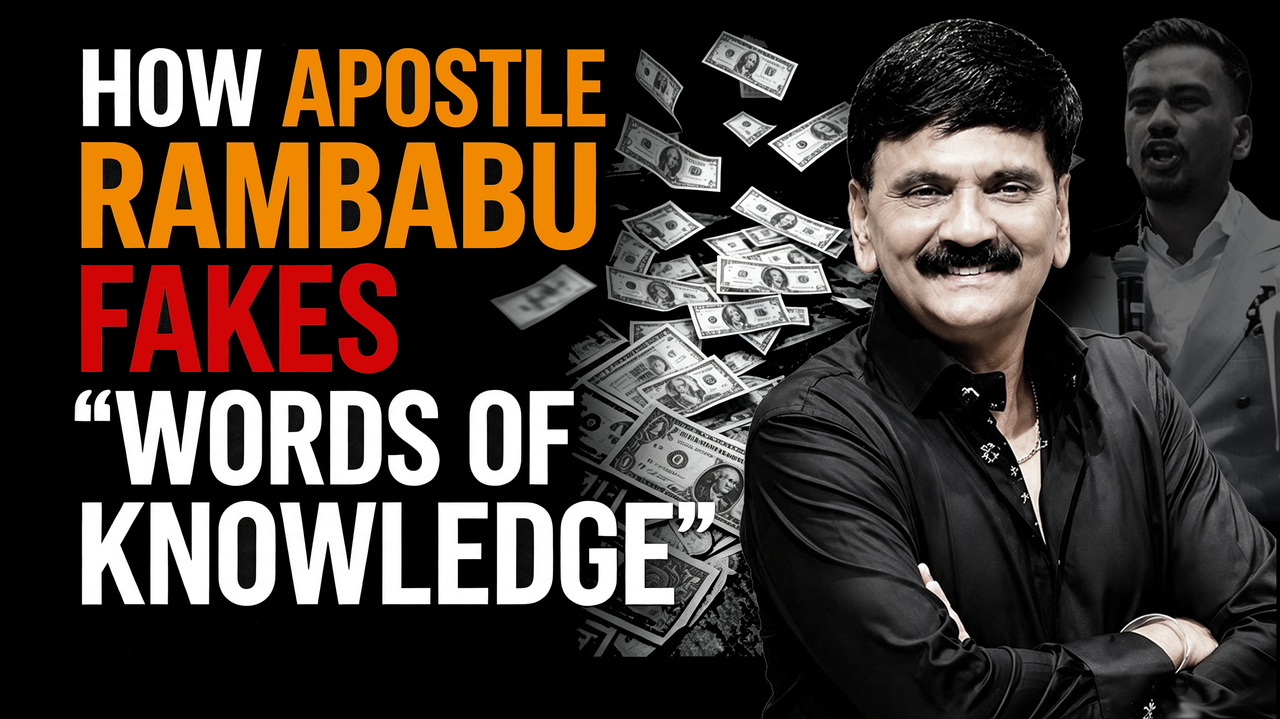
There is a longer video of around 50–55 minutes, some shorter videos, and another video responding to Rambabu's response to my original video — particularly his explanation of why he uses notes.
So, yes, he is now acknowledging that he uses notes.
I plan to make another update video answering many of the questions people have been asking, particularly about false prophets, false teachers and how we should recognise them.
And that brings me to something I have been planning to talk about for quite some time.
What Does a False Prophet Look Like?
One of the videos I want to make is How to Detect a False Prophet.
I think it will be helpful because many people simply do not know how to recognise a false prophet.
They expect a false prophet to have two horns coming out of his head, a pitchfork and perhaps a tail like a dragon.
They think, “Well, surely I would recognise a false prophet if I saw one!”
But a false prophet does not necessarily look like that.
They can look very smart.
They can look very clean.
They can be professional.
They can have money.
They can have stage presence.
They can have large crowds.
They can have all the things that make them appear successful and genuine.
And that is exactly why we need discernment.

How Does the Bible Describe False Prophets?
Jesus warned us about false prophets.
He said:
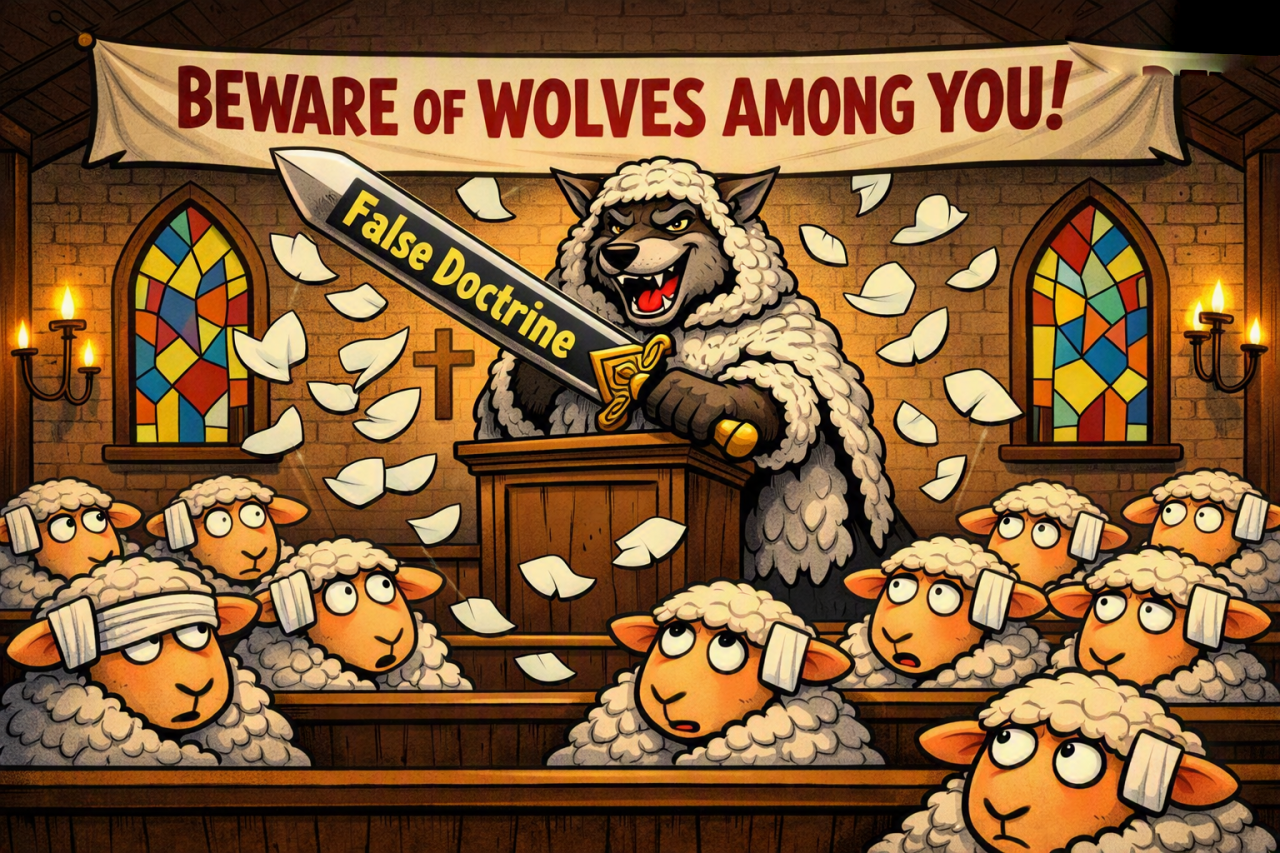
“Beware of false prophets, who come to you in sheep’s clothing, but inwardly they are ravenous wolves.”
— Matthew 7:15
Notice what Jesus said.
They come in sheep's clothing.
They do not necessarily arrive looking like the enemy.
They can look like sheep.
Paul also warned that Satan himself can transform himself into an angel of light.
In 2 Corinthians 11:13–15, Paul warns about false apostles and deceitful workers who transform themselves into apostles of Christ. He then says:
“And no wonder! For Satan himself transforms himself into an angel of light.”
That is why we need to be careful.
A false prophet can look genuine.
A false teacher can sound biblical.
A false ministry can look successful.
The Bible warns us about this.

What Is Biblical Discernment?
Discernment is not simply knowing the difference between something that looks good and something that looks bad.
The real challenge is knowing the difference between something that is good and something that looks good.
It is knowing the difference between something that is real and something that looks real.
That is biblical discernment.
Sometimes the deception can look extremely convincing.
The enemy is a liar, and Jesus called the devil a liar and the father of lies.
So we should not be surprised when deception comes dressed up as something spiritual.
This is why Christians need to test what they hear.
John tells us:
“Beloved, do not believe every spirit, but test the spirits, whether they are of God.”
— 1 John 4:1
Notice that he does not say, “Believe everything because someone says it is from God.”
He says test the spirits.
Why False Prophets Can Look Genuine
This is one of the biggest problems when it comes to false ministry.
People expect a false prophet to be obviously evil.
But what if they are very nice?
What if they are sincere?
What if they smile?
What if they have a large church?
What if thousands of people attend their meetings?
What if they have famous people supporting them?
What if they appear to perform miracles?
What if they give people words of knowledge?
None of those things, by themselves, prove that someone is genuinely sent by God.
Jesus warned us that false prophets would come in sheep's clothing.
That means they can look genuine.
They can look real.
And sometimes the deception is so convincing that people do not realise what is happening.
That is why discernment is so important.
False Prophets, Signs and Wonders
Jesus specifically warned about signs and wonders.
He said:
“For false christs and false prophets will rise and show great signs and wonders to deceive, if possible, even the elect.”
— Matthew 24:24
Paul also warned about “lying signs and wonders” in 2 Thessalonians 2:9.
So we cannot simply say:
“Something supernatural happened, therefore God must be behind it.”
That is not biblical discernment.
The Bible tells us that there can be signs and wonders connected with deception.
Someone can say, “The anointing is here.”
Someone can say, “The power of God is here.”
Someone can say, “Christ is here.”
But we still have to test what is happening.
Jesus warned us about this.
The question is not simply whether something looks supernatural.
The question is whether it is genuinely from God.
How Should Christians Test Words of Knowledge?
This is particularly important when it comes to words of knowledge.
I believe God can give supernatural revelation.
I believe the Holy Spirit can reveal things to people.
We should not reject the genuine operation of the Holy Spirit simply because spiritual gifts can be abused.
But that does not mean we should accept every claim of a word of knowledge without testing it.
For example, if someone gives a person's name, telephone number, licence plate, clothing or other personal information and says that God has revealed it to them, we should be allowed to ask:
Where did that information come from?
That is not unbelief.
That is a reasonable question.
It is part of testing a spiritual claim.
This is one of the reasons I have been looking at the use of notes in Evangelist Rambabu's meetings.
If information has been written down beforehand, we need to ask what that information is, where it came from and how it is being used.
I am not saying that God cannot give someone information beforehand.
Of course He can.
The question is whether the information being presented as a supernatural word of knowledge actually came from God.
That is what needs to be examined.
How to Test a Prophetic Ministry by Scripture
The answer is not simply to believe me.
The answer is not simply to believe Rambabu.
The answer is to look at the evidence and compare it with Scripture.
The Bereans give us a good example.
When Paul preached to them, they did not simply accept everything because Paul was an apostle.
Acts 17:11 says:
“They received the word with all readiness, and searched the Scriptures daily to find out whether these things were so.”
They listened.
They considered what Paul said.
And then they searched the Scriptures.
That is what Christians should do.
Don't simply believe someone because they are famous.
Don't believe someone because they have a large following.
Don't believe someone because they claim to be an apostle or prophet.
Test what they say.
Compare it with Scripture.
And look carefully at the evidence.
What Does the Bible Say About Testing Prophets?
The Bible repeatedly tells us to test things.
Paul says:
“Test all things; hold fast what is good.”
— 1 Thessalonians 5:21
John says:
“Test the spirits, whether they are of God.”
— 1 John 4:1
And look at what Jesus says to the church in Revelation 2:2:
“You have tested those who say they are apostles and are not, and have found them liars.”
They tested people who claimed to be apostles.
And Jesus commended them for doing it.
So when somebody says, “How dare you question a man of God?”, we need to remember what the Bible actually says.
Testing ministry is biblical.
Testing prophecy is biblical.
Testing spiritual claims is biblical.
Of course, that does not mean we should make careless accusations or attack people without evidence.
But neither should we be frightened into silence when there are legitimate questions that need to be examined.
How to Recognise the Fruit of a False Ministry
Jesus gave us another very important test.
He said:
“You will know them by their fruits.”
— Matthew 7:16
So look at the fruit.
What is the ministry producing?
What is the emphasis?
What are people being taught?
Is the emphasis on Jesus?
Or is it increasingly about the minister?
Is there a great emphasis on money?
Are people being encouraged to depend upon the minister?
Are supernatural claims being used to establish someone's authority?
Are people encouraged to ask questions?
Are people encouraged to search the Scriptures?
These things matter.
We should not simply look at how impressive the meeting appears.
We need to look at the fruit.
Is the Ministry Pointing People to Jesus or the Minister?
This is another important question.
Where does the attention go?
Is it going to Jesus?
Or is it going to the person on the platform?
John the Baptist gives us a wonderful example.
When people were looking at him, he pointed them towards Jesus.
He said:
“He must increase, but I must decrease.”
— John 3:30
That should be a principle for Christian ministry.
The minister should not become the centre.
Jesus should be the centre.
If the emphasis becomes:
“Look at me.”
“Look what I can do.”
“Look at my anointing.”
“Look at my prophetic gift.”
“Look at the amazing information I receive.”
then we should at least stop and ask some questions.
Where is all this pointing?
Why Christians Should Test Supernatural Claims
Some people accuse you of lacking faith when you question supernatural claims.
But questioning a claim is not the same as rejecting God.
The Bible tells us to test things.
If somebody says, “God told me,” that does not mean that we are required to accept the statement without examination.
We can ask questions.
We can examine the evidence.
We can search the Scriptures.
And we can look at the fruit.
That is not a lack of faith.
It is biblical discernment.
Questions to Ask When Examining a Prophetic Ministry
When you are looking at any prophetic ministry, ask some simple questions.
Does the teaching agree with Scripture?
Is Jesus genuinely at the centre?
What kind of fruit does the ministry produce?
Is there a strong emphasis on money?
Is the minister constantly drawing attention to themselves?
Are supernatural claims open to examination?
Can words of knowledge be tested?
Are explanations consistent when difficult questions are asked?
Are people encouraged to search Scripture for themselves?
Does the ministry point people towards Christ or towards a personality?
These are not questions that should only be asked about Evangelist Rambabu.
They should be asked about every ministry, including mine.
Don't simply believe me because I am making these videos.
Test what I say too.
How Evangelist Rambabu's Prophetic Ministry Is Being Questioned
My recent videos have focused on Evangelist Rambabu and questions surrounding his prophetic ministry, particularly his use of words of knowledge.
One of the issues I have raised is the use of notes before certain detailed words of knowledge are given.
There has now been a response explaining why notes are used.
I want to examine that response and some of the questions people have been asking.
But I encourage you to do something very simple:
Watch the evidence for yourself.
Don't just listen to me.
Don't just listen to Rambabu.
Watch the videos.
Look at what happens before the words of knowledge are given.
Listen to what is said.
Compare the explanations.
Then think about it for yourself.
That is what I want people to do.
I Am Not Just Doing This for Money
Some people have accused me of doing this because I want money.
Others say that I am judging people or that I should not be calling out ministers.
But most of the work I do is nothing like this.
Much of my ministry is helping local churches with evangelism, improving their evangelism and training churches in how to reach people with the Gospel.
This is not what I spend most of my time doing.
But there are times when something needs to be challenged.
Paul told believers:
“And have no fellowship with the unfruitful works of darkness, but rather expose them.”
— Ephesians 5:11
There is a biblical place for exposing deception.
The question is how we do it.
We need to be truthful.
We need to be fair.
We need to deal with evidence.
And we need to make sure that what we are saying can be supported.
What About People Who Defend These Ministries?
Some people continue to support a minister even after serious questions have been raised.
That happens all the time.
People can become very committed to a particular preacher or ministry.
They may have been following them for years.
They may have had experiences they believe were genuine.
They may have trusted the person for a long time.
And when somebody challenges that person, it can be very difficult for them to reconsider what they have believed.
That is why our ultimate loyalty must not be to a preacher.
It must be to Jesus Christ and the Word of God.
Watch the Evidence for Yourself
If you have not watched the videos about Evangelist Rambabu, please go and watch them.
There is a longer video of around 50–55 minutes, along with shorter videos and a video dealing with the explanation about the use of notes.
I also have a documentary called Miracles for Sale, where I look at claims surrounding miracles, words of knowledge and how some people can present things as supernatural when there may be another explanation.
That documentary will also help answer some of the questions people have been asking.
My purpose is not simply to attack a minister.
I want Christians to learn how to detect false prophets, recognise false teachers and test prophetic claims.
And this applies to everybody.
Don't believe something simply because a preacher says, “God told me.”
Don't reject something simply because somebody else says it is false.
Test all things and hold fast what is good.
That is biblical discernment.
And every Christian needs it.