Why Do Bad Things Happen To Good People?
 James
James 
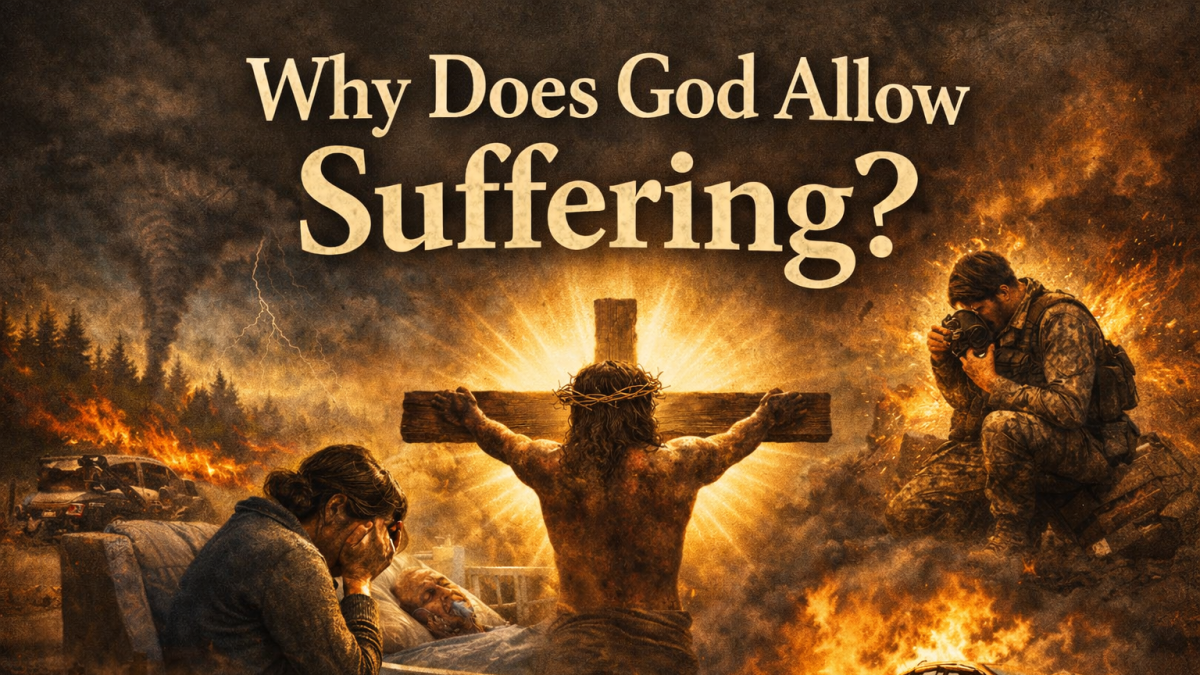
People universally wonder why God allows suffering. More specifically, they wonder why good people suffer.
Why Do Bad Things Happen to Good People? (Biblical & Real-World Answer)
Introduction: A Question That Cuts Deep
The question “Why do bad things happen to good people?” is not just philosophy—it is often a cry from a hurting heart searching for meaning in pain. It shows up in hospital rooms, funeral homes, broken relationships, and personal loss.
But biblically speaking, we’ve got to start with a bit of a reality check: the idea of a perfectly “good person” just doesn’t really hold up when you measure it against God’s standard.
As Jesus puts it quite plainly, “No one is good—except God alone” (Mark 10:18). And once you let that sink in, it sort of flips the whole conversation on its head.

1. The Biblical Problem: A Fallen World 🌍
The Bible teaches that humanity lives in a fallen world, shaped by the original sin of Adam and Eve.
This brought:
- Physical decay
- Moral brokenness
- Spiritual separation from God
This means suffering isn’t always some kind of personal punishment — more often than not, it’s just the result of living in a broken world that’s not quite running as it should.
Real choice exists, so does the possibility of things going wrong. A lot of the mess we see is down to human decisions — things God didn’t author, but allows within a bigger picture we don’t always see clearly.
And even things like natural disasters, illness, or accidents sit under what some theologians call “amoral natural laws” — basically creation itself is out of sync, not personally targeting the “good people” or picking victims like some kind of cosmic lottery.
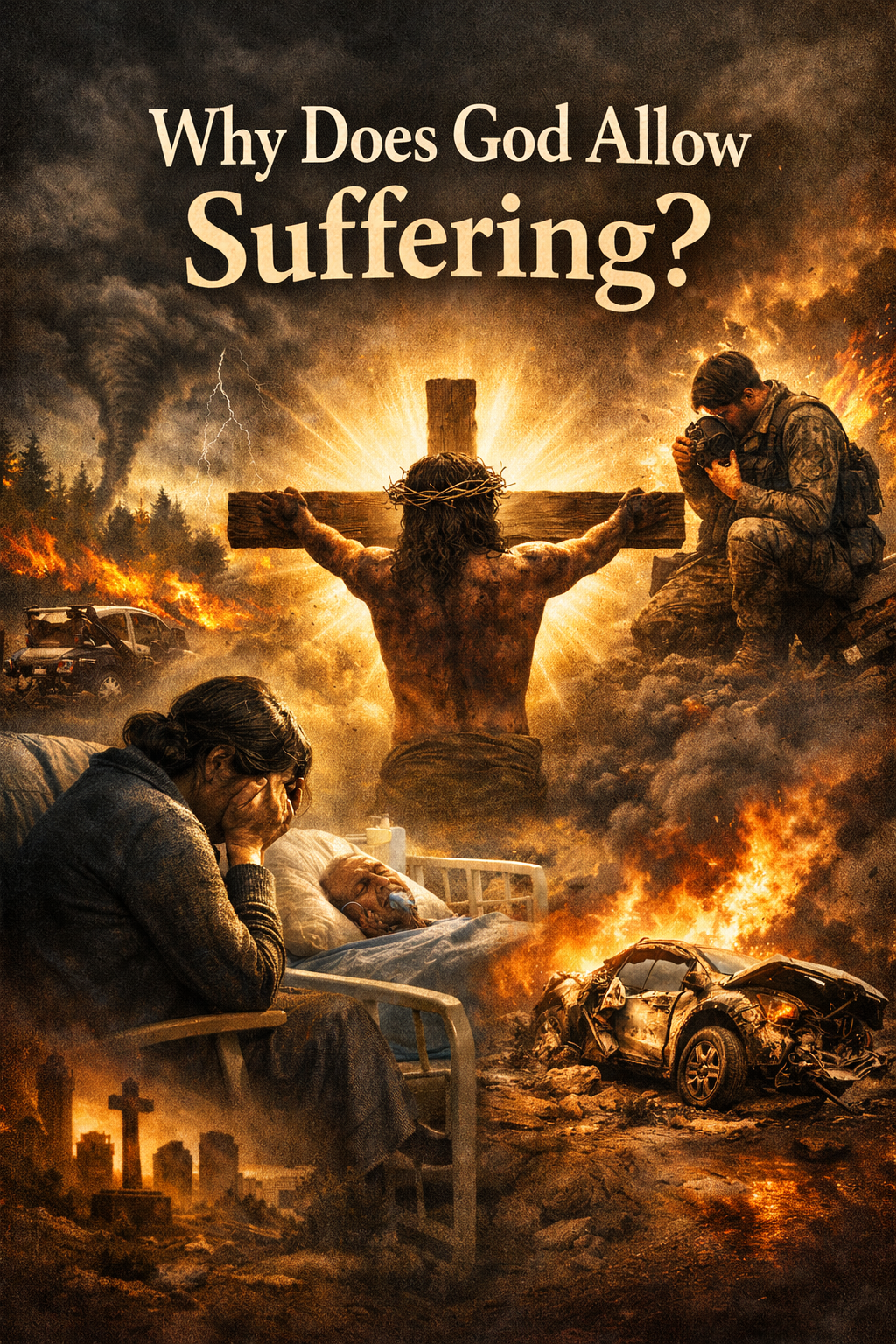
2. The Purpose of Pain: Not Wasted Suffering 🔥
The Bible consistently presents suffering as purposeful rather than random.
As C.S. Lewis (C. S. Lewis) famously wrote, pain is “God’s megaphone”—a way of getting our attention when life becomes too comfortable.
Scripture also shows that trials:
- Develop spiritual maturity
- Strengthen faith under pressure
- Produce endurance and stability
This is why Romans 5:3–4 links suffering with perseverance and hope.
Many believers discover that their deepest wounds become their strongest ministry. Those with “battle scars” often carry the greatest compassion for others.
3. Is God in Control? Sovereignty vs. Struggle
There is a real tension in theology.
Some, like Harold Kushner, suggest God is loving but limited—unable to prevent all suffering. However, the dominant biblical view is that God remains sovereign even in tragedy.
The Book of Job is the clearest example: a righteous man suffers intensely, not as punishment, but within a divine plan beyond human understanding.
Even modern tragedies are often reinterpreted through redemption. Some observers noted that events such as public assassinations or national crises involving figures like Charlie Kirk have unexpectedly led to renewed conversations about faith and eternity.
4. The Cross: Where the Question Is Answered ✝️
The deepest answer is not theoretical—it is historical.
As R.C. Sproul (R. C. Sproul) emphasised, only one truly “good person” ever suffered unjustly—Jesus Christ. And He did so willingly.
The cross shows:
- God does not ignore suffering
- God enters into suffering
- God redeems suffering
Jesus, the only sinless One, absorbed the worst evil to bring salvation to a broken world.
5. A Better Question: “What Now?”
Instead of remaining stuck on “Why did this happen?”, Scripture often redirects us to “What now?”
Pain becomes meaningful when it is:
- Shared with others
- Transformed into compassion
- Offered back to God in trust
As many have said, we are called to “blow on the coal of the heart”—to turn suffering into light for someone else.
Because ultimately, God does not fumble what He allows.
Conclusion
Bad things do happen to people we consider “good,” but the Bible reframes reality: we live in a broken world, served by a sovereign God, pointing toward a redeemed future.
The cross proves that suffering is not the end of the story.
Summary
✔ The question is usually a cry of pain, not just theory
✔ Biblically, no one is truly “good” by God’s standard (Mark 10:18)
✔ We live in a fallen world shaped by sin, producing suffering and brokenness
✔ Free will allows both love and real evil
✔ Suffering is often purposeful, not random
✔ It can produce maturity, endurance, and stronger faith (Romans 5:3–4)
✔ Pain can become preparation for future ministry
✔ C.S. Lewis: pain acts as “God’s megaphone”
✔ God remains sovereign even in suffering
✔ Job shows suffering is not always punishment
✔ The ultimate answer is the cross of Christ
✔ Jesus, the only truly innocent sufferer, redeems suffering through His death
✔ The focus shifts from “Why?” to “What now?”
✔ Suffering can be transformed into trust, compassion, and purpose
✔ Conclusion: broken world, sovereign God, redeemed future—the cross proves suffering is not final
Further Reading
- The Sovereignty of God
- https://www.biblegateway.com/passage/?search=Romans+5%3A3-4
- https://www.biblegateway.com/passage/?search=Job+1
#FaithInPain #HopeInSuffering #WhyDoesGodAllowSuffering #WhyDoesGodAllowPain #ProblemOfEvil #ChristianAnswers #IfGodIsGoodWhyDoBadThingsHappen #BiblicalAnswerToSuffering #ChristianAnswerToSuffering #WhatDoesTheBibleSayAboutSuffering #GodsSovereignty #GodWorksAllThingsForGood
Categories: : Doctrine
I have read and agree to the terms & conditions.