Dominion Theology, SPAC Nation, and the Gospel: A Biblical Response to Modern “Kingdom” Teaching
 James
James 
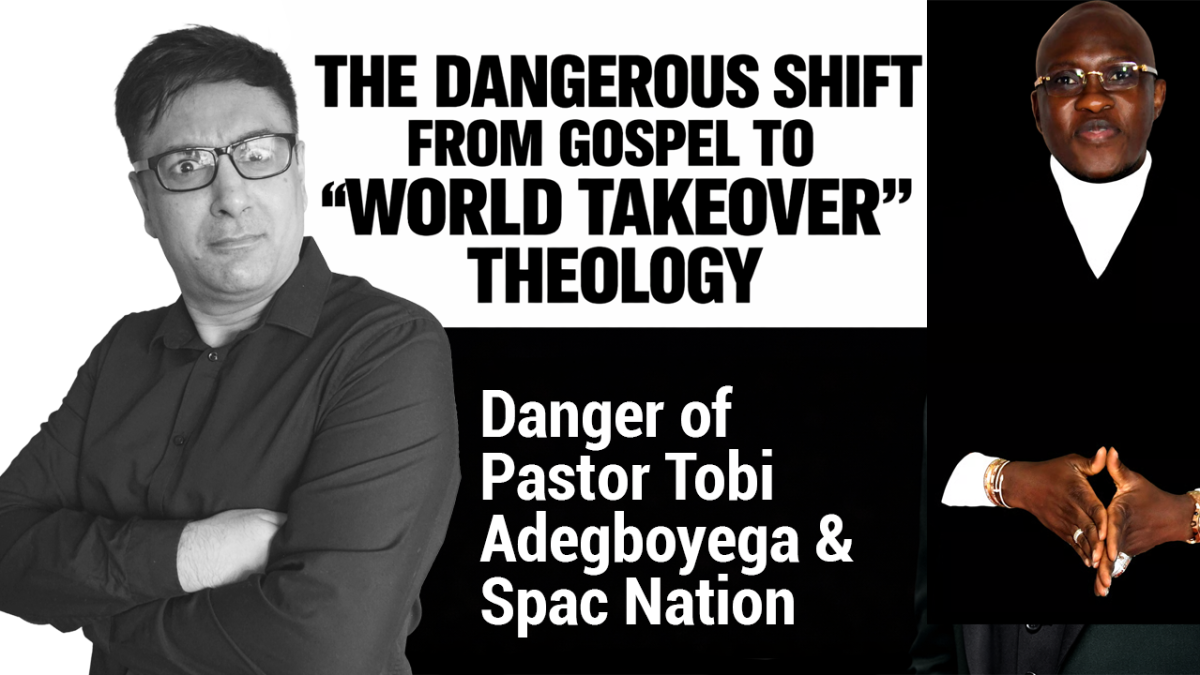
A biblical analysis of Dominion Theology, SPAC Nation teachings, and modern interpretations of the Gospel,.
Introduction
In recent years, you’ll find a fair bit of teaching floating around charismatic and evangelical circles about what people like to call “Dominion Theology” or “Kingdom advancement” — basically the idea that the Church should be influencing society, culture, and even national structures in a fairly big way (not just the church rota or who forgot to make the tea).
One name that may come up in these conversations is Pastor Tobi Adegboyega of SPAC Nation, who has spoken about nation-building, cultural influence, and transforming society as part of the Gospel mandate — in other words, taking the message of the Gospel well beyond Sunday morning and into the wider world, sometimes with a lot more ambition than a small church noticeboard ever expected.
So in this article, we’re going to take a look at all of that through the lens of Scripture, Church history, and the original message of Jesus — and ask a pretty simple question:
Is the Gospel really about taking over systems and running the show, or is it about God quietly doing heart surgery on people through Christ?
What Is Dominion Theology?
Dominion Theology is a broad theological idea that suggests Christians are called to have influence — or “authority,” as some would put it — over areas of society like government, media, education, and culture, all in preparation for Christ’s return.
In other words, it’s the belief that faith shouldn’t just stay neatly tucked inside church buildings on a Sunday, but should spill out into everyday life that's true) and shape the world around us (sort of, but not necessarily) — sometimes described in very bold (and occasionally slightly dramatic) terms.
Different variations have appeared over time, including:
- Reconstructionist theology (which basically suggests the world might benefit from a bit more Old Testament law — a bold idea that tends to spark lively theological debates… and occasionally nervous laughter)
- The Seven Mountains Mandate (the idea that Christians should influence key cultural “spheres,” which sounds slightly like a spiritual version of conquering a very intense board game map)
- Modern “Kingdom now” teachings in some charismatic movements (which emphasise the present-day expansion of God’s Kingdom — sometimes expressed with more enthusiasm than a Sunday morning coffee machine)
While not every version of this teaching looks exactly the same, they usually circle around a common idea: that the Church should be doing more than just singing hymns and making decent tea after Sunday service — it should be actively shaping society too.
In some cases, that’s described as influence, and in others it’s a bit more bold, sounding closer to control or “taking charge,” depending on who’s doing the preaching and how fired up they are on the day.
SPAC Nation and “Kingdom Influence” Teaching
SPAC Nation, led by Pastor Tobi Adegboyega, has been associated with teachings that emphasise:
- Leaving “four walls religion”
- Becoming influential in society (business, politics, culture)
- Building communities that transform nations
- Redefining church growth as societal impact rather than attendance
At first glance, these ideas can sound positive—encouraging Christians to be active in society. However, the concern raised by critics is when cultural influence becomes confused with the primary mission of the Church.

The Biblical Gospel: What Did Jesus Actually Say?
The central question is whether the New Testament supports the idea of political or societal domination as the mission of the Church.
Jesus clearly defines His kingdom differently:
“My kingdom is not of this world.” (John 18:36)
The Gospel message consistently focuses on:
- Repentance and forgiveness of sins (Luke 24:47)
- Salvation through faith in Christ (Ephesians 2:8–9)
- The new birth and transformation of the heart (John 3:3)
The Great Commission is not a call to political control but to:
“Go and make disciples of all nations…” (Matthew 28:19)
Discipleship is about teaching obedience to Christ, not establishing governmental authority.
Nation-Building vs Gospel Preaching
One of the key tensions in Dominion-style teaching is the shift in focus:
- From preaching the Gospel
- To building systems, influence, and societal structures
However, the New Testament emphasis is clear:
“It is the power of God that brings salvation.” (Romans 1:16)
The primary mission of the Church is not institutional reform but spiritual transformation.
The Gospel changes individuals first, and changed individuals may then influence society—not the other way around.
The Danger of Confusing the Kingdom of God
One of the key concerns with Dominion Theology is that it can blur important distinctions:
1. Reformation vs Regeneration
- Reformation changes systems
- Regeneration changes hearts
The Bible emphasises regeneration as the foundation of the Kingdom.
2. Political Power vs Spiritual Authority
The early Church did not advance through political takeover but through preaching, suffering, and witness empowered by the Holy Spirit.
3. Conquest vs Commission
The Church is sent to preach, not to conquer:
“Preach repentance and forgiveness of sins in His name.” (Luke 24:47)

Church Growth or Cultural Transfer?
Another critique often raised is the idea of redefining church growth as societal influence.
However, biblical church growth is consistently defined as:
- People coming to faith in Christ
- Lives being transformed by the Spirit
- Communities of believers being formed
Not simply cultural visibility or institutional expansion.
Acts describes growth as:
“The Lord added to their number those who were being saved.” (Acts 2:47)
Biblical Balance: Influence Without Distortion
It is important to note that Christianity does encourage believers to be:
- Salt and light in society (Matthew 5:13–16)
- Good workers, leaders, and citizens
- Active in doing good works
However, this influence flows from the Gospel—it is not the Gospel itself.
When influence replaces salvation as the central message, the foundation becomes distorted.
Conclusion
Dominion Theology and similar teachings raise important questions about the mission of the Church. While Christians are called to live faithfully in society and reflect Christ in every area of life, the New Testament consistently places the focus on:
- Preaching Christ
- Calling people to repentance
- Transforming hearts through the Holy Spirit
The Kingdom of God advances not through political dominance or structural takeover — it doesn’t need a political campaign office or a strategy PowerPoint — but through the power of the Gospel and the quiet, stubborn miracle of transformed human hearts: Regeneration by the Sovereignty of God. not reform by the plans of man.
#DominionTheology #SPACNation #TobiAdegboyega #KingdomOfGod #GreatCommission #ChristianTeaching #BiblicalTruth #GospelMessage #ChurchGrowth #ChristianDiscernment #SevenMountainsMandate #FalseTeaching #BiblicalTheology #FaithAndDoctrine #ChristianApologetics
Categories: : Doctrine, False Teachers
I have read and agree to the terms & conditions.